

Have you ever stood before the dairy aisle wondering which milk carton size makes the most sense? You’re not alone. Whether you’re sipping a splash in your morning coffee or pouring out enough to feed a small army of cereal bowls, milk carton sizes matter more than we often think. The variety isn’t just for show; it caters to lifestyles, storage setups, and consumption habits.
The Evolution of Milk Cartons
Back then, milk was delivered in glass bottles—remember those iconic clinking containers? Over time, packaging evolved to meet convenience, safety, and environmental demands. Enter the milk carton: lightweight, disposable, and surprisingly versatile. Initially adopted in the 20th century, cartons quickly became a staple in homes, schools, and cafeterias. They’re easier to transport, stack neatly, and keep milk fresher longer.
Discover More : Dollar Bill Dimensions Explained: A Guide in Centimeters
Standard Milk Carton Sizes Explained
Milk isn’t a one-size-fits-all beverage; thankfully, its packaging reflects that. Let’s walk through the most common sizes at the store and what they’re best suited for.
Half-Pint Milk Cartons
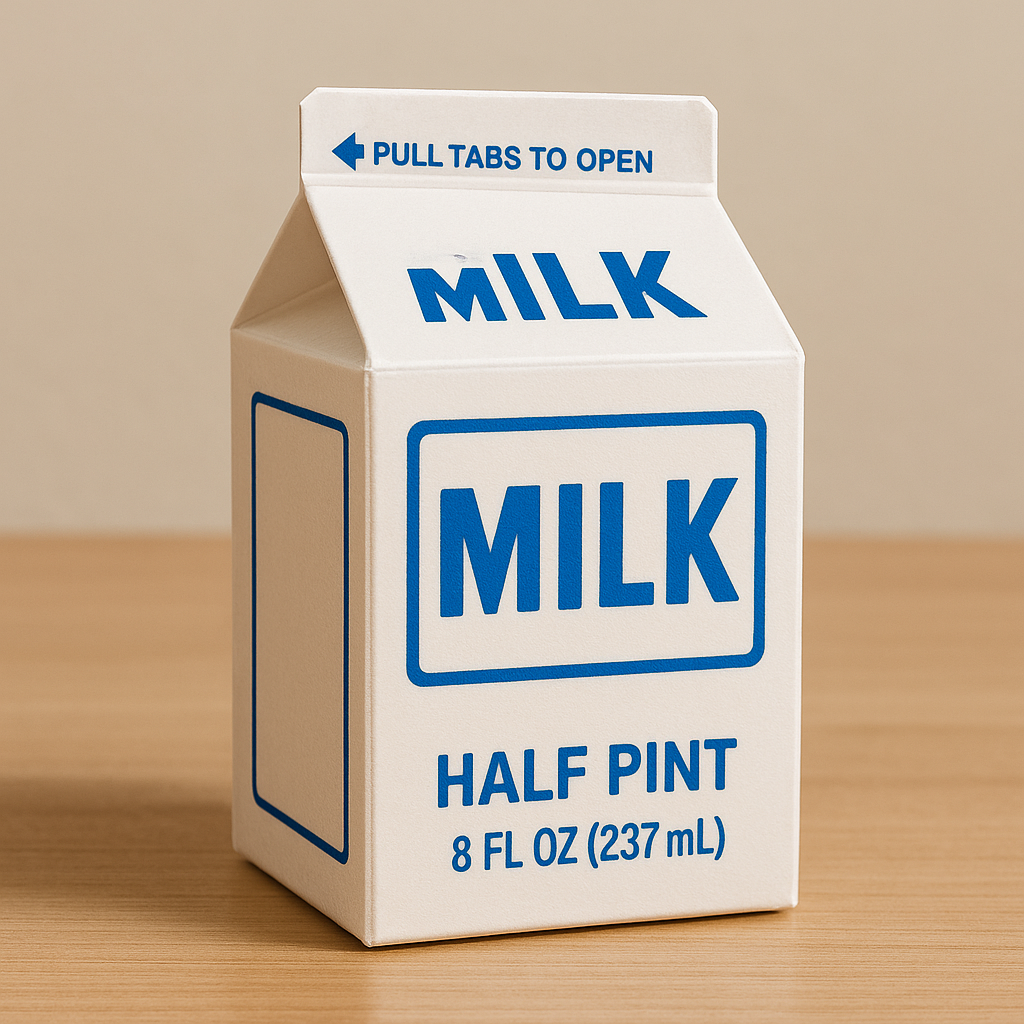
Tiny but mighty, the half-pint (8 ounces / 237 ml) carton is a familiar sight in school lunchrooms nationwide. It’s perfect for single servings—a quick snack, a child’s meal, or even a portable creamer substitute for coffee lovers on the go. These cartons are lightweight, easy to store, and designed for immediate consumption. Dimensions are roughly 3.5 inches tall by 2.25 inches wide by 2.25 inches deep (8.9 cm x 5.7 cm x 5.7 cm). No wonder they’re a cafeteria favorite.
| Dimension | Inches | Centimeters |
|---|---|---|
| Height | 3.5 in | 8.9 cm |
| Width | 2.25 in | 5.7 cm |
| Depth | 2.25 in | 5.7 cm |
Quart Milk Cartons
Next up, the quart size (32 ounces / 946 ml). This one’s ideal for small households or individuals who don’t consume milk daily. If you want to top off your cereal or whip up the occasional pancake batter, a quart gives you enough without risking spoilage. It’s also a convenient option for alternative milks, which some purchase in smaller quantities. The typical dimensions are around 7.5 inches tall by 3 inches wide by 3 inches deep (19 cm x 7.6 cm x 7.6 cm).
Half-Gallon Milk Cartons
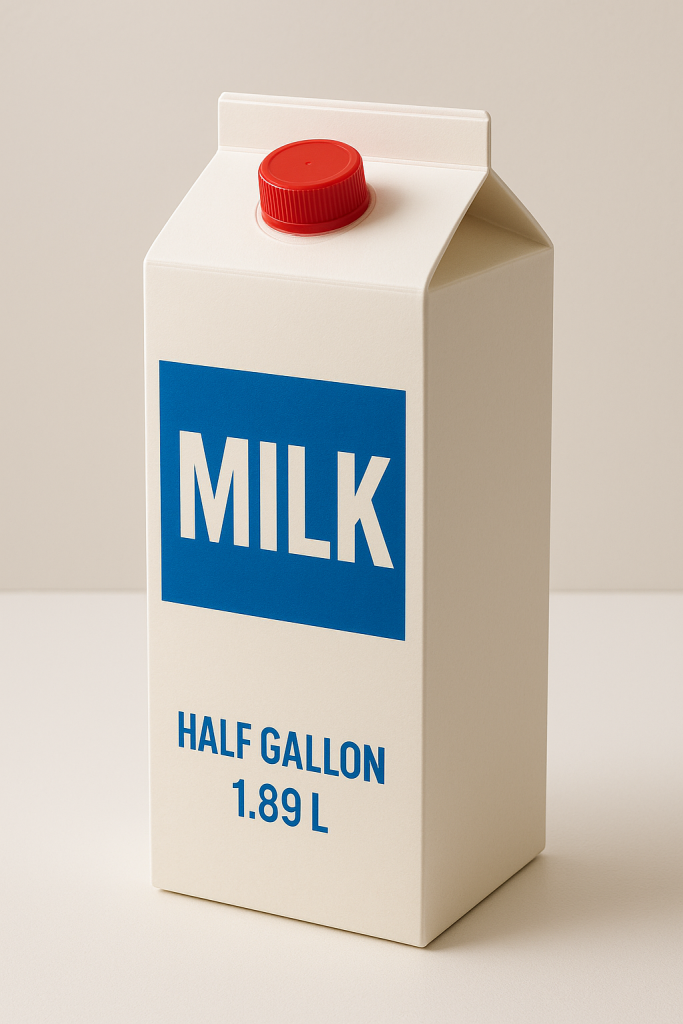
Stepping it up, the half-gallon carton (64 ounces / 1.89 liters) is a go-to for average-sized families. It balances supply and freshness, often lasting a week or so depending on usage. This size is a refrigerator staple and fits well in most standard door shelves. Plus, it’s manageable for pouring—no wrist workouts required. These usually measure about 9.5 inches tall by 4 inches wide by 3.5 inches deep (24.1 cm x 10.2 cm x 8.9 cm).
| Dimension | Inches | Centimeters |
|---|---|---|
| Height | 9.5 | 24.1 |
| Width | 4.0 | 10.2 |
| Depth | 3.5 | 8.9 |
Gallon Milk Cartons
Finally, the big guy: the gallon carton (128 ounces / 3.78 liters). This is your all-in commitment to dairy. The gallon size is economical and eco-friendly per ounce, best suited for large families, heavy milk users, or shared households. But fair warning—it takes up serious fridge real estate and can be clunky to pour, especially for kids. Gallons are commonly found in plastic jugs, but when in carton form, they measure approximately 10.5 inches tall by 6 inches wide, and 6 inches deep (26.7 cm x 15.2 cm x 15.2 cm).
How Milk Carton Sizes Impact Storage and Usage
The size of the carton doesn’t just influence how much milk you get; it also affects how you store it and how fast you use it. Smaller cartons, like half-pints and quarts, tuck easily into mini-fridges or office coolers. They’re great for reducing waste, too, since you’re more likely to finish them before they expire. Larger cartons, while efficient in cost per ounce, demand more storage space and careful handling.
There’s also a psychological aspect. Ever notice how a gallon seems to disappear faster than it should? Sometimes, bigger packaging encourages heavier usage—like when you suddenly open a party-size bag of chips and they’re gone.
Alternative Milk Containers: Sizes and Benefits
Beyond traditional cartons, milk comes in plastic jugs, glass bottles, and aseptic (shelf-stable) boxes. Each has its perks:
- Plastic Jugs: Durable and resealable. Most common for gallons and half-gallons.
- Glass Bottles: Reusable and environmentally friendly, though heavier and pricier upfront.
- Aseptic Cartons: Perfect for non-dairy options like almond, oat, or soy milk. These come in various sizes, often in quarts or liters, and don’t require refrigeration until opened.
Alternative containers often align with niche preferences—like organic products, zero-waste lifestyles, or plant-based diets.
Discover More : Complete Guide to School Bus Sizes – Small, Medium & Large Options
Conclusion
So, what’s the perfect milk carton size? That depends on how you live, eat, and store. Single servings for quick convenience, quarts for light usage, half-gallons for balance, and gallons for the full-tilt dairy devotees. Each size plays a role in reducing waste, maximizing freshness, and keeping your kitchen organized.
Take a moment next time you’re standing in front of the milk section. Think about how much milk you use and how much space you have in your fridge. It’s not just about volume—it’s about lifestyle fit. And when the carton matches the consumer, everyone wins.

Suzana explores how culture, geography, and tradition influence the sizes of everyday items—from clothing to furniture. With international research experience, he brings global perspective to Sizello’s content.
Leave a Reply